Cabinet painting
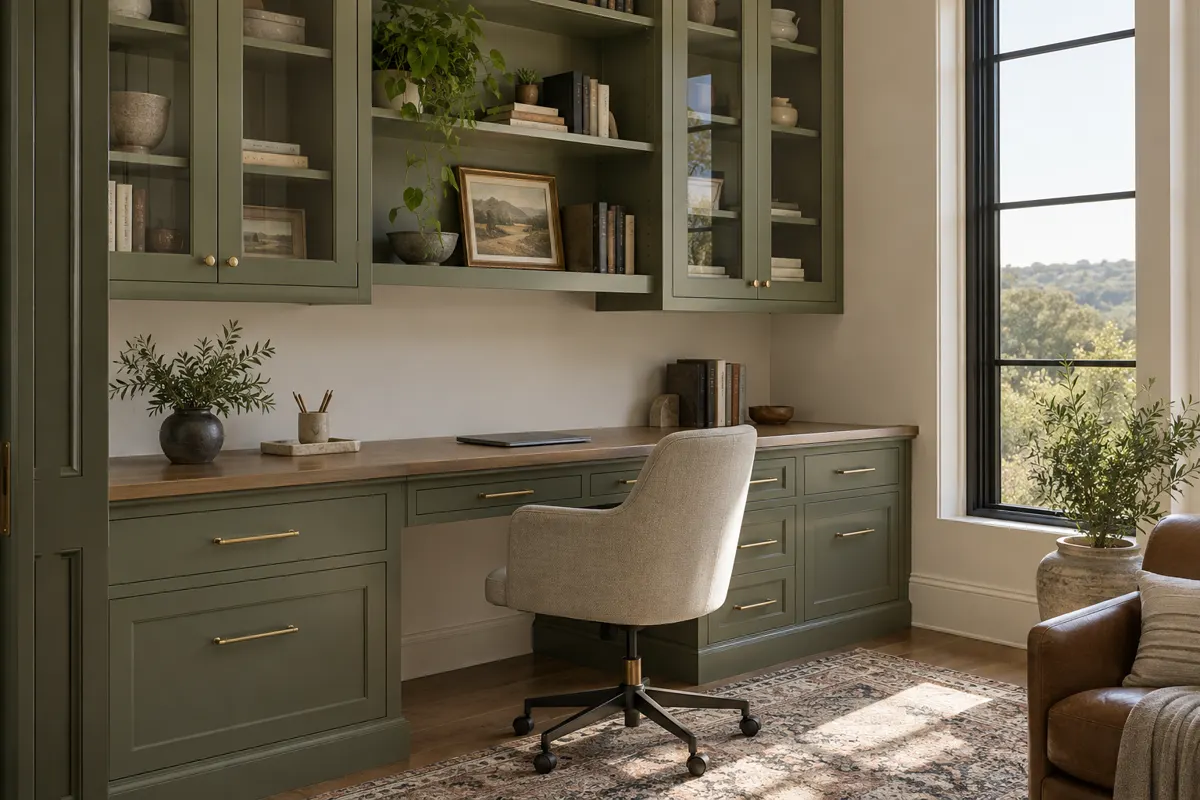
An opaque color over the existing finish. The old surface is cleaned, scuffed and primed so the new coat bonds to it, then sprayed. This is the most common request, and it works on wood, MDF and previously lacquered doors.
Austin Elite Cabinets offers cabinet painting in Austin, TX, and is a leading Travis County finisher for homeowners who like their cabinet doors but not their color, specializing in sprayed paint finishes, restaining and clear-coat refinishing. We offer grain filling for open-pored oak and full stripping back to bare wood.
Book a free design visit
Our team provides degreasing, scuff sanding and bonding primer on every door and drawer front, delivering a smooth, hard-wearing color for homes and a durable refresh for both residential and commercial projects. The same crew that measures and labels every piece at your walkthrough is the crew that sprays and rehangs it, and the finished work carries a written warranty.
From a 220-grit scuff over the old factory finish to at least two topcoats on every box face, door and drawer front, our team handles every detail. Serving Austin, Rollingwood, Sunset Valley and Lakeway, we give a dated kitchen a new finish without a single box or door being replaced.
Why Austin Elite
No catalogue boxes and no handoffs. The people who measure your room are the people who build and install it.
Everything on this page keeps what you already own. The boxes stay on the wall and the doors stay your doors. Only the surface changes, and there are three ways to change it.
An opaque color over the existing finish. The old surface is cleaned, scuffed and primed so the new coat bonds to it, then sprayed. This is the most common request, and it works on wood, MDF and previously lacquered doors.
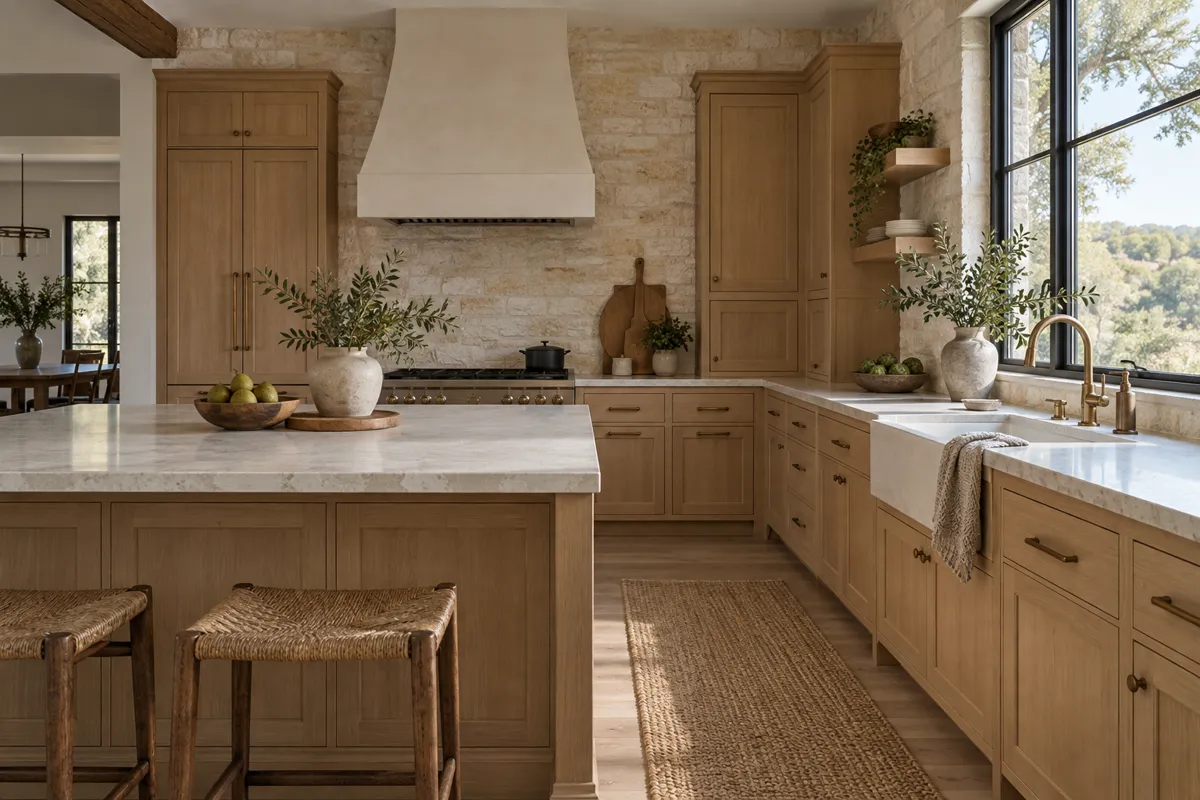
A new wood tone that still shows the grain. Stain has to reach bare wood to soak in, so restaining means stripping the old finish first, then sanding through a schedule of grits before any stain goes on. It is more labor than paint, and it only makes sense on solid wood or thick veneer worth showing.
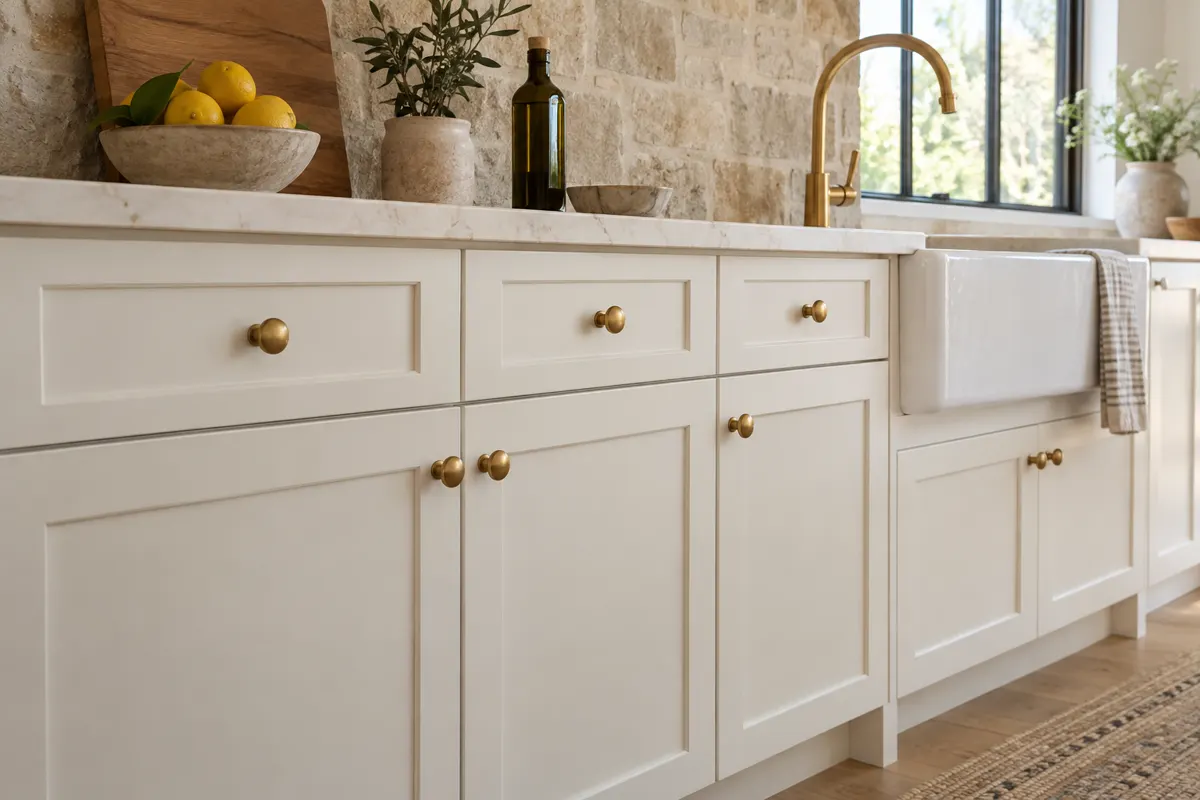
For cabinets whose color you still like but whose topcoat has gone dull, sticky or worn through around the pulls. We clean and scuff the surface and lay a new clear coat over it, so the wood tone stays and the protection comes back. At the measure we look at your doors, tell you which of the three they can take, and explain why.
Paint changes color. It does not change shape, fix damage or hold onto a failing surface. We turn down painting jobs that would fail, and these are the usual reasons.
If your doors are sound and the style suits you, painting or refinishing is the smallest, least disruptive way to change the room.
The process
A painted kitchen fails at the prep, not at the paint. Grease from cooking and hands clogs sandpaper and stops primer from bonding, so every step here is aimed at adhesion.
Doors, drawer fronts and hardware come off, and every piece is labeled to its opening so it goes back exactly where it came from. Counters, floors and appliances are masked.
Degreasing always comes before sanding. Every surface is cleaned with a degreaser strong enough to lift the invisible film of cooking oil.
The existing finish is sanded to a uniform profile, around 220 grit, to give the primer something to grip. The goal is a dull, even scuff, not bare wood. On slick thermofoil in sound condition or on an old lacquer, an adhesion promoter is added.
A bonding primer goes on next. It improves adhesion, evens out color, and blocks tannins in some woods from bleeding through a light paint.
Doors and drawer fronts are sprayed rather than brushed, in thin coats with drying time between, and at least two finish coats go on. Face frames and end panels are coated to match.
Once the finish has cured, every labeled piece goes back on its own hinges. We adjust each door and open every drawer with you at the walkthrough.
Austin's humid subtropical climate means long, hot summers and air that carries moisture, and a kitchen adds steam on top of that. The finish has to cope with both. Conversion varnish. A catalyzed finish rated for severe use, with excellent resistance to many household substances. It is the hardest wearing option for a busy kitchen. Two-part polyurethane. Very tough and fast to cure once mixed. Water-based polyurethane and waterborne paint. Fewer volatile organic compounds, which matters when the family is living in the house during the work. Water-based coatings can raise the grain slightly, so they need a light sand between coats. Lacquer. Available clear, satin or gloss, and recoats without sanding between coats.
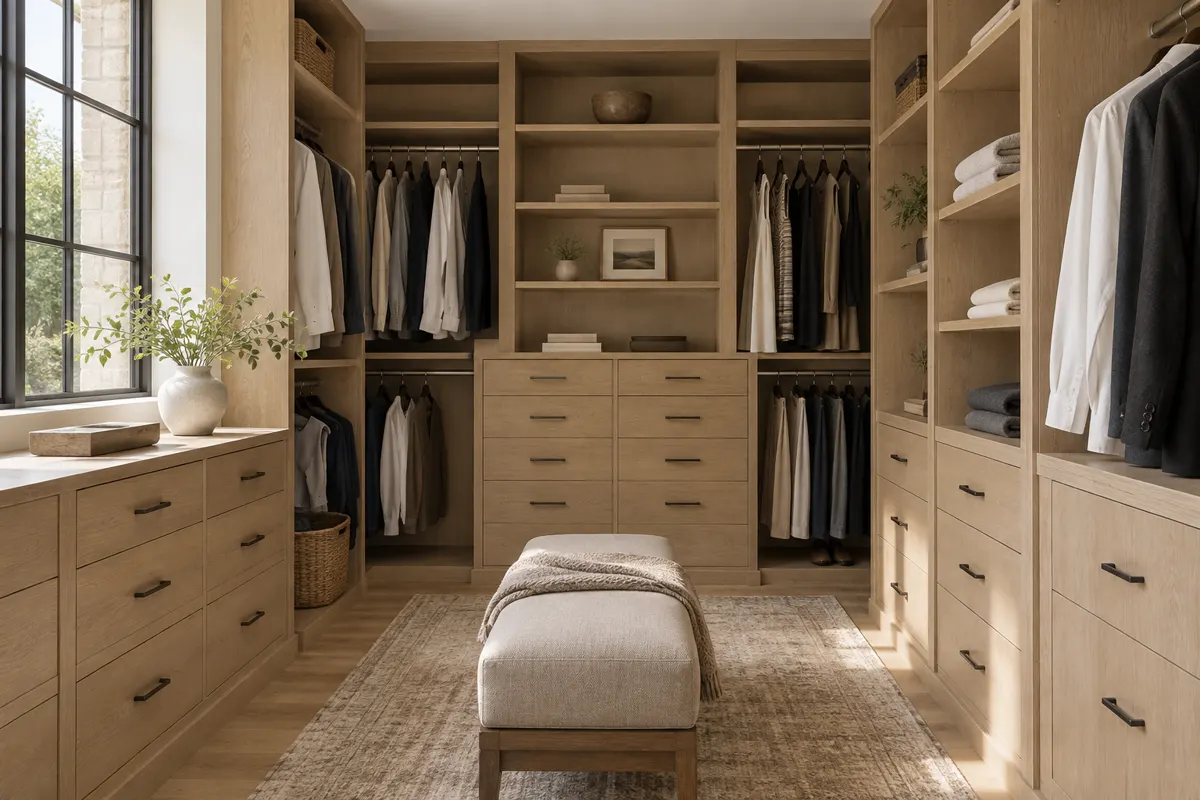
Oak is ring-porous, meaning its open pores show through paint as a texture. Some homeowners like that. If you want a smooth, furniture-like surface, the pores need grain filling before primer so the coating can bridge them. Tell us at the measure which look you want, because it changes the prep.
Pigmented stains sit in the grain and highlight it, along with any sanding scratch left behind. Dyes are more transparent and do not exaggerate the grain. Stain can absorb unevenly on some woods and look blotchy, which is why we test on the back of a door before committing a kitchen to a color.
A good share of west-side Austin houses predate 1990, and the oldest of them predate 1978, sometimes with painted cabinets or trim from that era. The EPA estimates that about three quarters of U.S. homes built before 1978 still contain some lead-based paint.
Federal rules under the EPA's Renovation, Repair and Painting program govern paid work that disturbs painted surfaces in those homes, and sanding cabinets is exactly that kind of work. If your house predates 1978 and the cabinets have been painted before, tell us at the measure. It changes how prep is planned, how dust is contained and how the schedule runs, and we would rather plan it properly than find out halfway through.
Homes in Rollingwood, West Lake Hills and Shady Hollow are the ones most likely to raise this question, since those communities hold a large share of older houses.
There is no honest flat rate for painting a kitchen, because the prep varies far more than the paint. These are the drivers.
Painting is the smallest of the keep-the-boxes jobs because nothing is built new. Your real figure comes from the free in-home measure, where we look at the doors in person. Call to book it.
We paint and refinish kitchens across Travis County: Austin, Rollingwood, West Lake Hills, Sunset Valley, Shady Hollow, Barton Creek, Lost Creek, Steiner Ranch, Lakeway, The Hills and Volente.
The job looks different by neighborhood. Builder-grade kitchens from Steiner Ranch's 2000s growth often have sound doors in a finish chosen for price, which makes them strong painting candidates. Older Shady Hollow and West Lake Hills kitchens more often have solid wood doors that can be stripped and restained. Newer lake homes in Volente sometimes simply want a color change on cabinets that are barely worn.
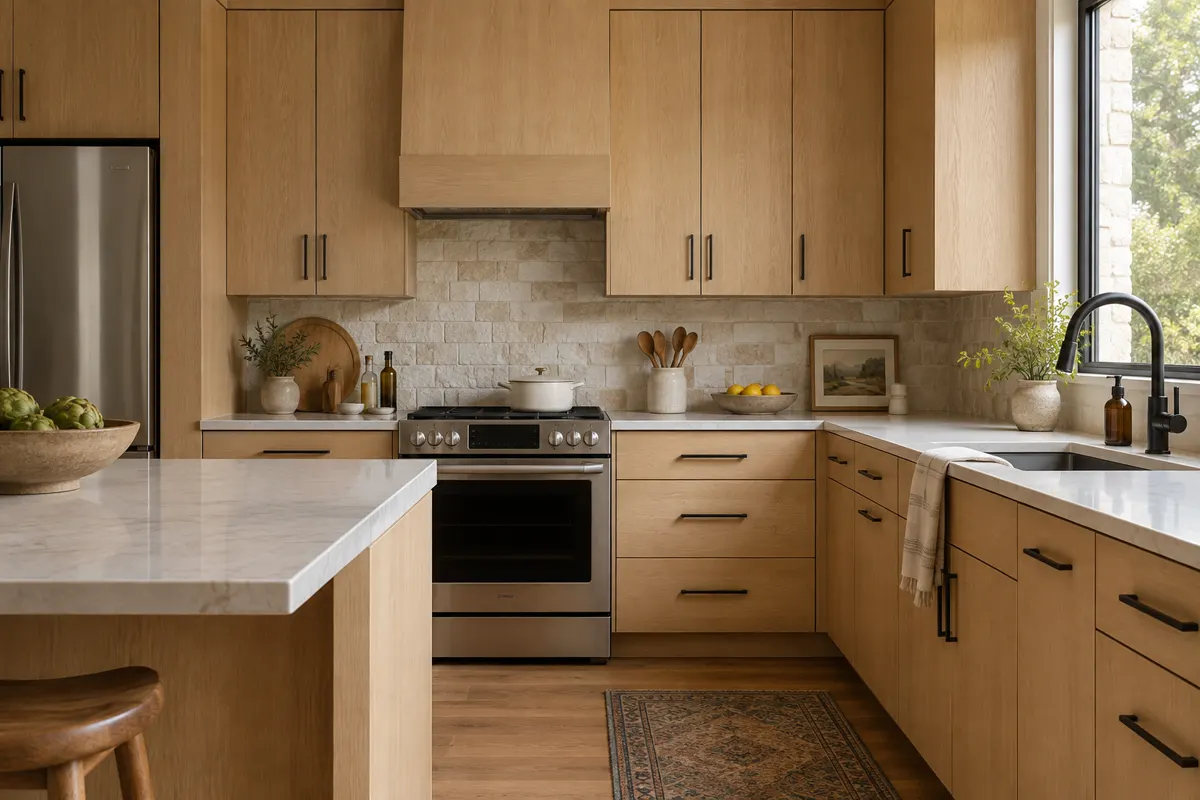
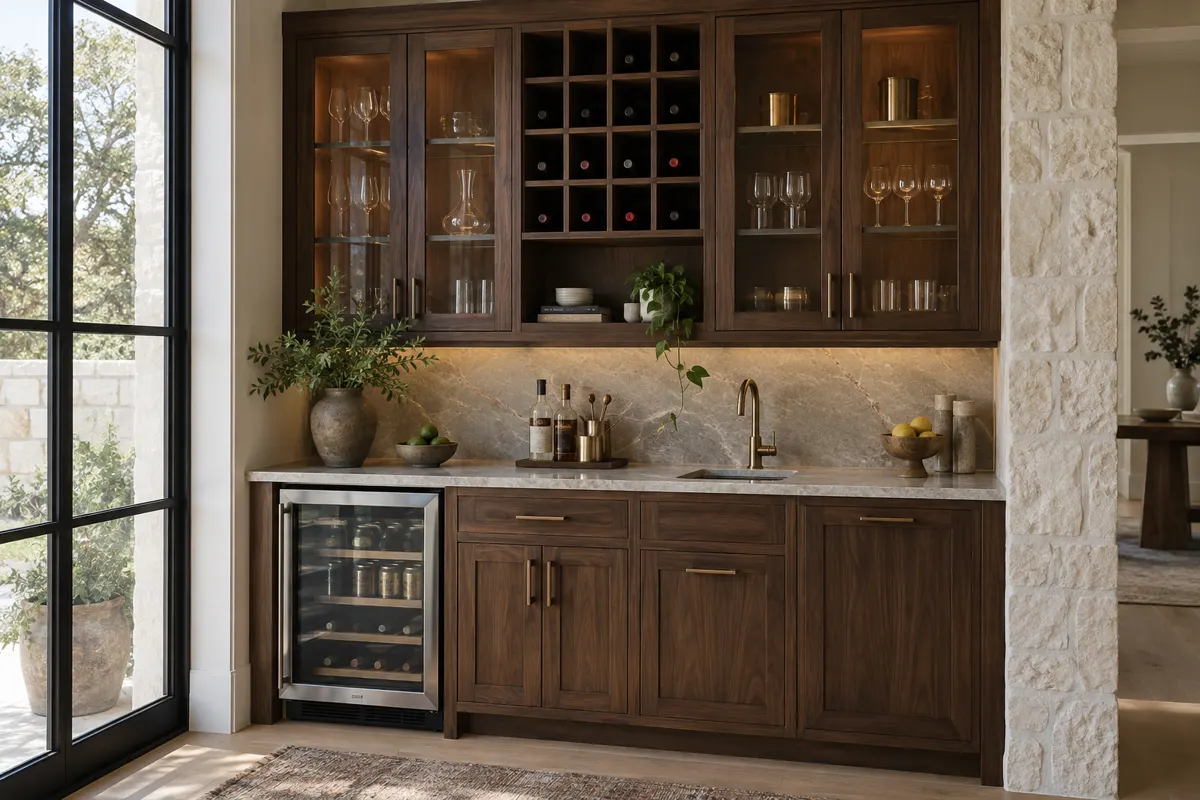
Drag the handle. The room and layout stay; the cabinet fronts change.
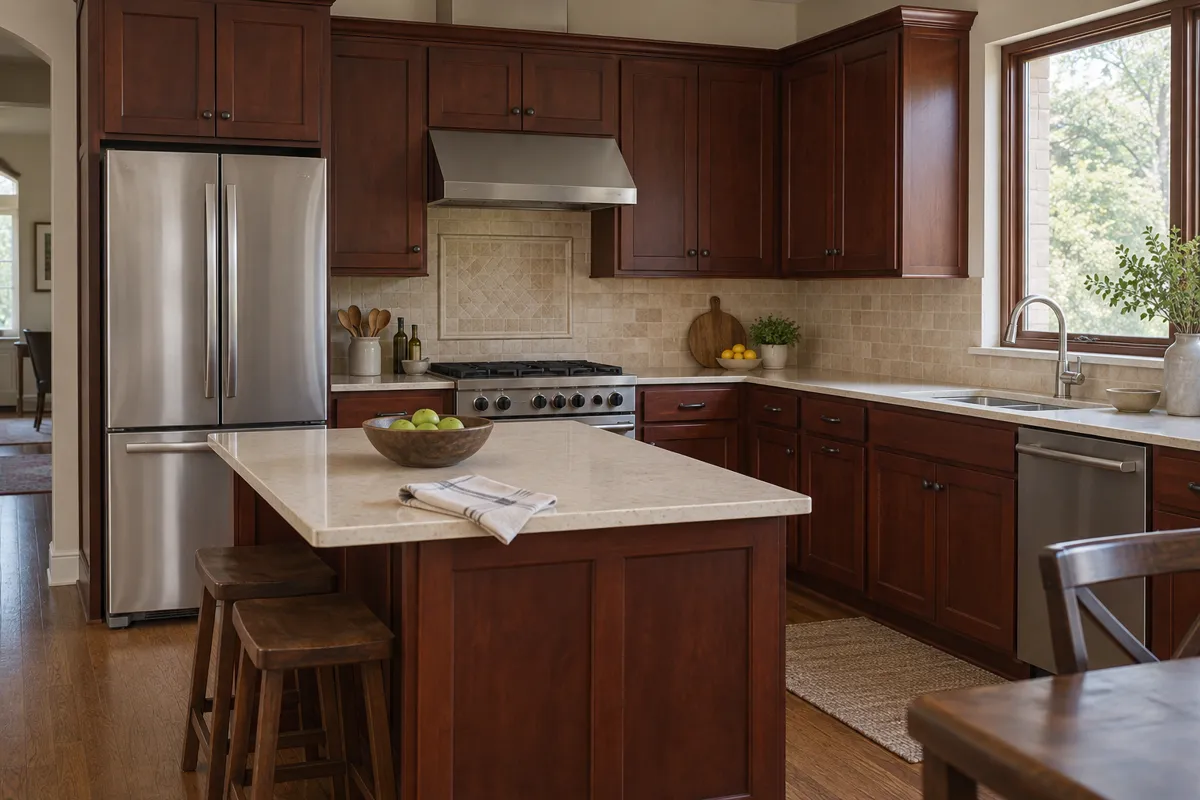
 BeforeAfter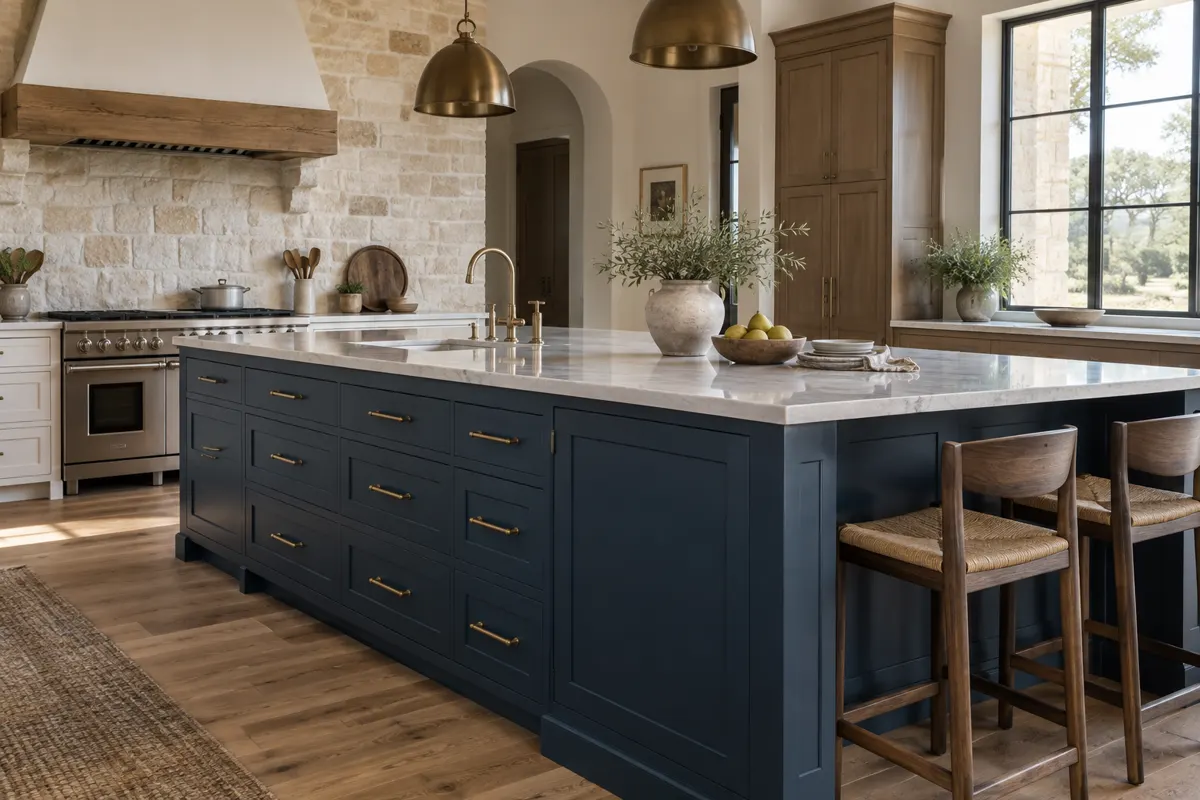
Questions
The number of doors and drawer fronts, the length of frames and end panels, the door style, whether you want paint or a new stain, how much grease and old finish has to be dealt with, the finish system and any new hardware. We give you a real figure after the free in-home measure.
Sound thermofoil can be scuffed, treated with an adhesion promoter and painted. Peeling thermofoil cannot, because the vinyl keeps lifting under the paint. Those doors are better replaced.
Going lighter means removing the old finish and color, which is a strip-and-refinish job on solid wood. We check at the measure whether your doors have enough wood to strip, or whether paint or new doors is the better route.
It will unless the pores are filled first. Some people like the texture. If you want a smooth surface, we grain fill before priming.
Paint if the doors are sound and you like their style. Replace the doors if they are damaged or you want a new style but the frames are fine. Reface if frames, end panels and doors are all worn. We tell you which fits at the measure.
The boxes stay in place, so the kitchen remains usable, though the doors are off while they are prepped, sprayed and cured. We give you the schedule in writing before work starts.
Yes, the work comes with a written warranty.
Austin and the west side of Travis County, from Rollingwood and West Lake Hills out to Lakeway, The Hills and Volente. Call and we will confirm your address.
Free in-home design visit across Austin and the west side. We call you back to set a time.
Calls only, we do not receive text messages.