Inset vs Full Overlay: The Look and the Trade-Offs
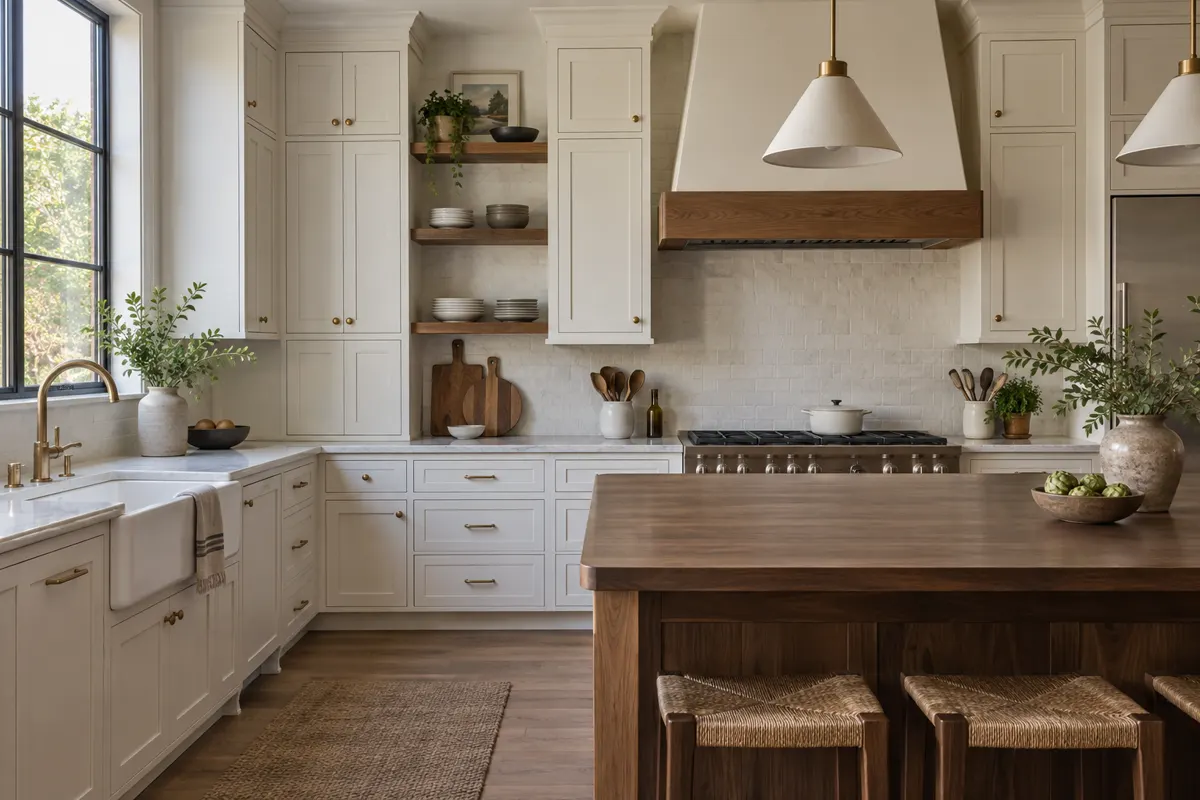
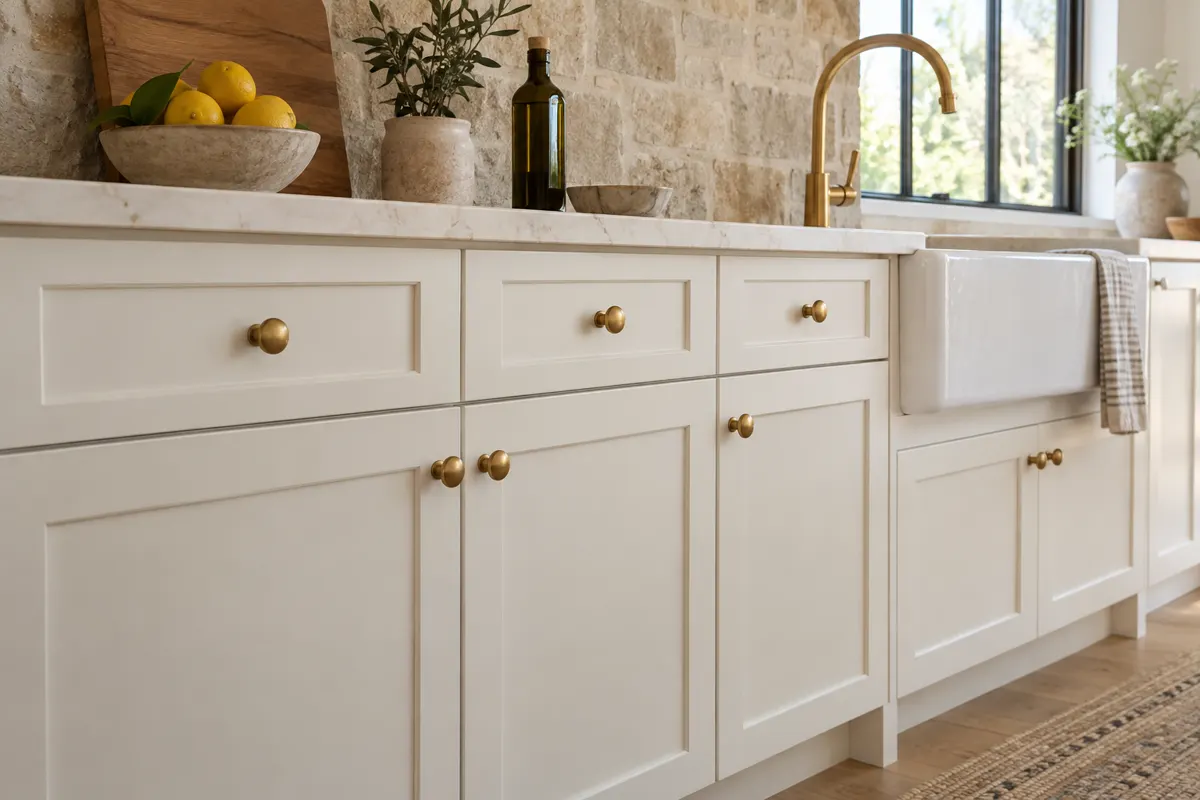
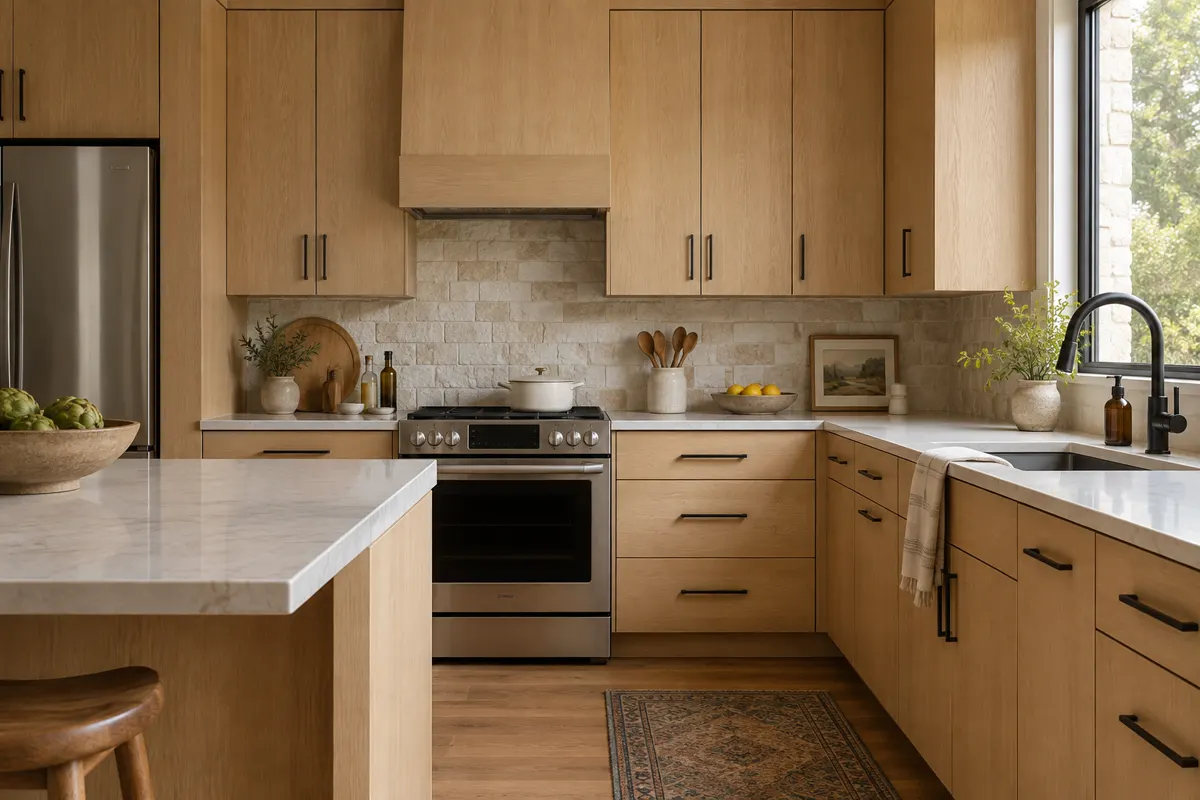
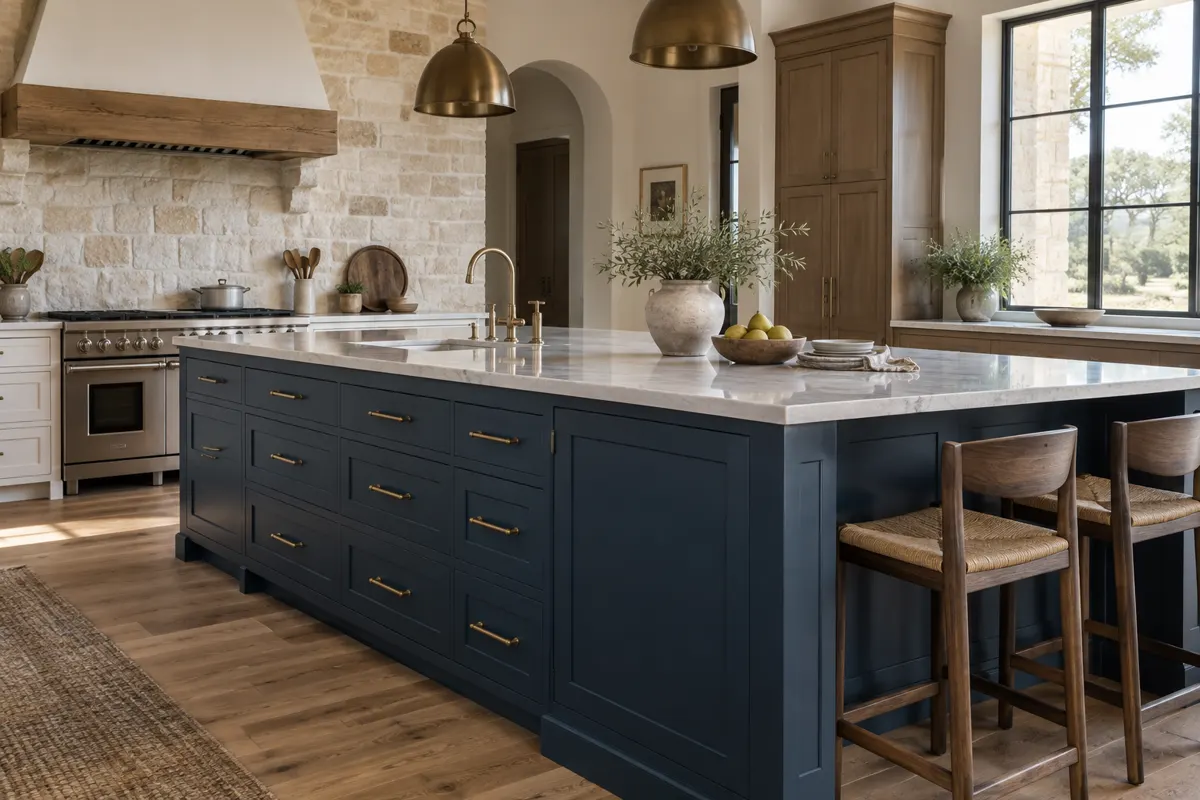
Full-overlay doors cover nearly all of the face frame when closed, so the kitchen reads as a wall of doors. Frameless cabinets look similar. Inset shows the frame on purpose.
There is a practical trade-off. With inset, the door sits inside the frame, so the frame stile stays in the opening when the door is open. A typical face frame is about an inch and a half wide, and in framed construction a drawer has to clear it, which can make it around two inches narrower than the space inside the box. On a run of narrow cabinets, that loss is noticeable.
We reduce it two ways. Built as one continuous run rather than as separate boxes, the frame uses a single stile between openings instead of two doubled together. And we plan wider drawer banks where storage matters most, keeping narrow doors for spots like spice pull-outs where the width barely matters.
If the look you want is flush but the storage math worries you, we can draw the kitchen both ways so you compare interior widths side by side.